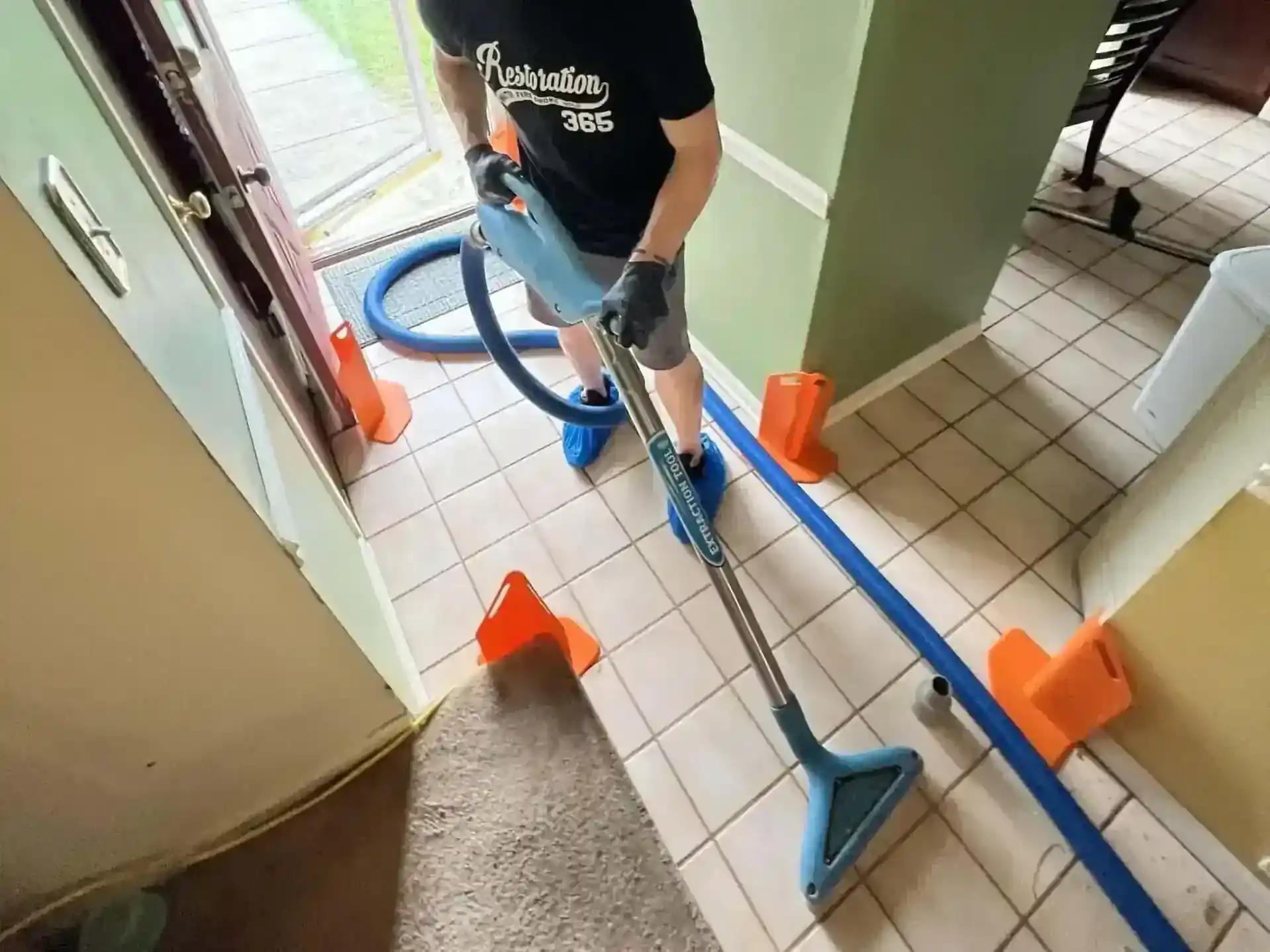
Emergency guide
What to Do When Your Water Heater Bursts
Keep out of unsafe water, stop the supply only if you can reach it safely, and arrange plumbing repair and damage cleanup. These are separate jobs, and both may need attention.
Call 267-486-2628Prefer a callback? Send a cleanup request.
Restoration 365 · Reviewed by Joe S. and Tracy D., IICRC-certified technicians.
Published:
1. Check for danger before entering
Keep children and pets away from the wet area. Water near outlets, an electrical panel, appliances or extension cords needs caution even when the puddle looks shallow. Do not walk through water to reach a breaker or water valve.
If you can access the electrical panel from a dry, safe location, shut off the affected power. If reaching it requires entering water, call an electrician. Do not restore power to wet equipment until a qualified electrician has checked it. CDC electrical safety guidance explains these precautions.
If you smell gas, leave the building immediately. Do not operate switches or use a phone inside. Call your gas utility or 911 from a safe location outside; do not try to repair or shut off the gas yourself. See PECO’s natural gas safety instructions.
2. Stop incoming water if it is safe
A failed tank can continue leaking while the supply feeds it. If the water heater’s water shutoff is accessible without entering the affected area, close it. If you know where the home’s main water shutoff is and can reach it safely, that is another way to stop incoming water.
Do not force a stuck valve, disconnect pipes or handle hot water. If you cannot identify the right valve or reach it safely, ask a plumber or water utility for help. Keep clear of the heater until the source and any electrical or gas concerns have been addressed.
3. Arrange source repair and cleanup
Call a plumber for the failed heater, its connections and replacement. Call a restoration company for water that has reached floors, walls, insulation or belongings. Tell both companies what is happening so equipment access and the replacement can be coordinated.
Restoration 365 handles water extraction, moisture assessment and drying after heater leaks and failures. Call 267-486-2628 for emergency help in our Montgomery County service areas. We can arrive within 60 minutes in the listed towns; ask for the current arrival estimate when you call.
4. Record what happened from a safe place
Take wide photos showing the water’s path and closer photos of affected materials. Note when you discovered the leak and when the water was stopped. Save the plumber’s report and receipts, and keep a list of damaged belongings.
Notify your insurer promptly if you intend to make a claim. Ask about documentation and whether damaged items need to be retained for inspection. NAIC claim guidance recommends photos, loss records and receipts. Do not enter an unsafe area to gather evidence.
5. Keep the affected area accessible
From dry areas, clear a route for the plumber and cleanup crew. Move dry belongings away from the water’s path when you can do so safely. Avoid stepping on wet carpet or moving damaged appliances. Tell the crew if the water may have mixed with drain backup or stored chemicals.
Do not use a household vacuum to pick up water. Leave wet electrical equipment unplugged and ask the restoration crew before setting up fans. The assessment needs to account for where the water traveled and what it contacted, not just the visible puddle.
After the standing water is removed
Extraction is the beginning of cleanup. Water may remain in carpet padding, behind trim or beneath flooring. The crew should explain what needs drying, what may need removal, and how progress will be checked.
For the next stage, read how water-heater damage drying is assessed. If the plumber has already installed a new heater, use our post-replacement cleanup checklist to decide what still needs attention.
A water-heater cleanup from our records
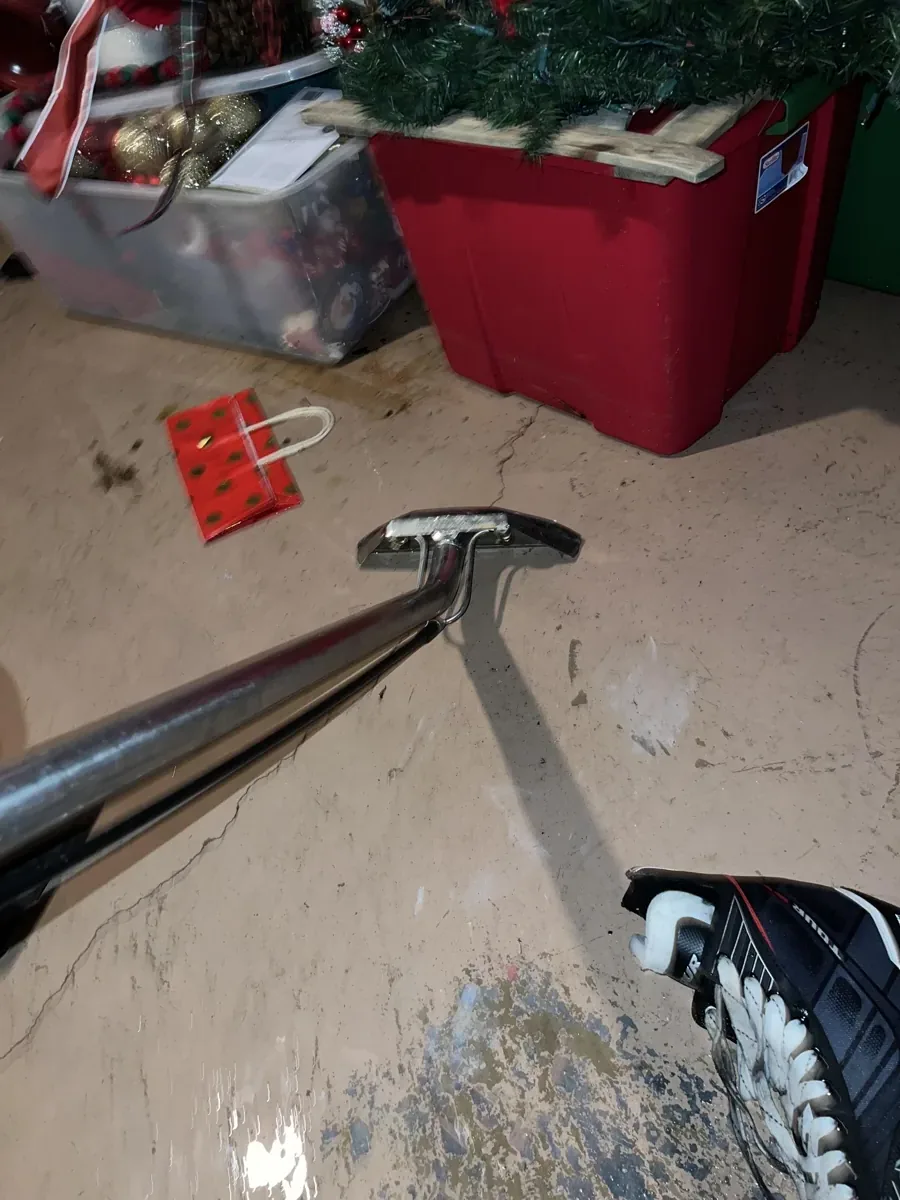
See the documented local cleanup example. Every property needs its own assessment.
Request a cleanup callback
Tell Restoration 365 what happened and where you need help. We will contact you to discuss the cleanup.
Active flooding or standing water? Call 267-486-2628 for emergency availability. Do not wait for a form response.
Request received.
We will contact you about your request. For urgent help, call 267-486-2628.