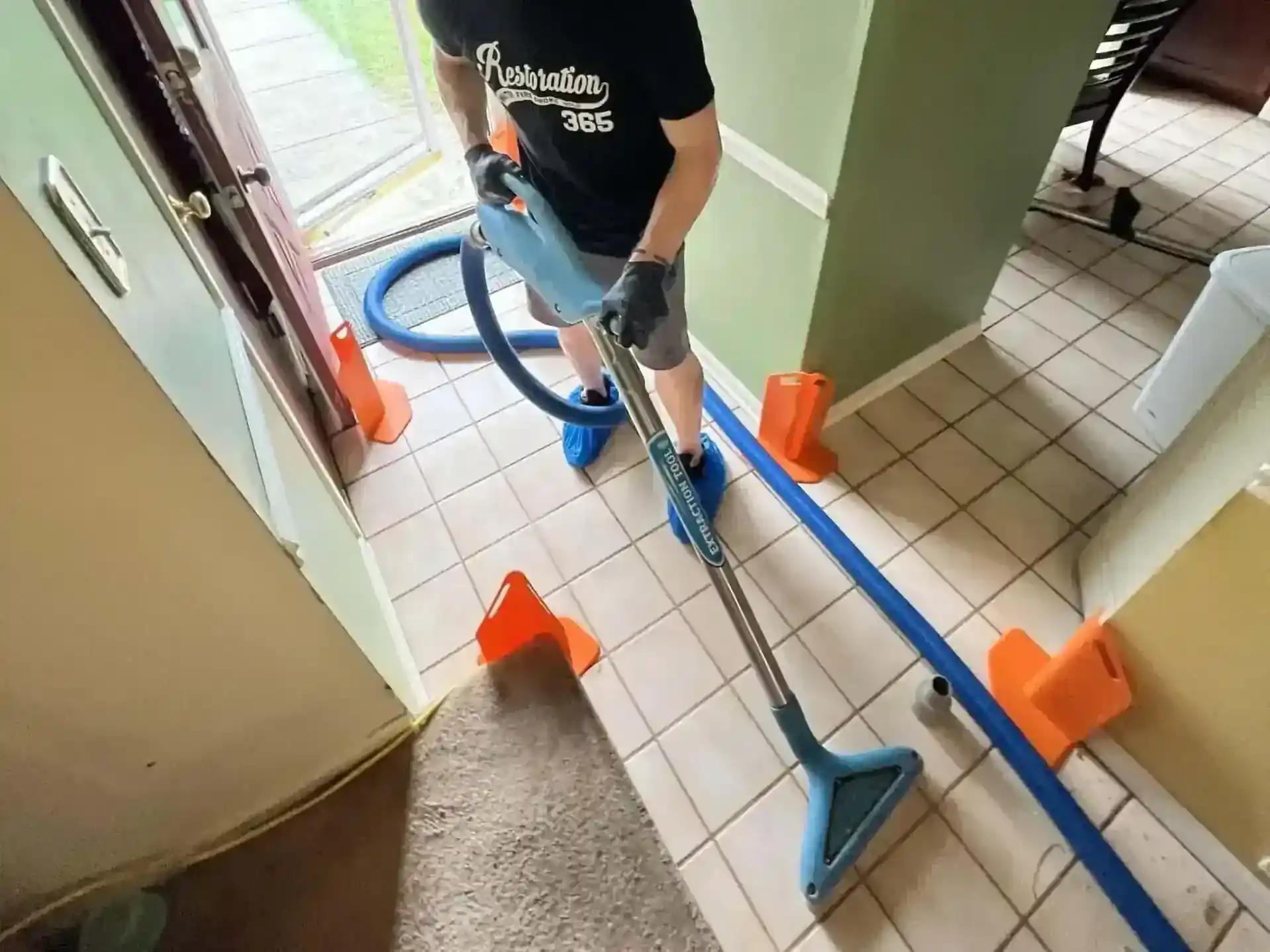
After replacement
Water Heater Replaced—Do You Still Need Water Damage Cleanup?
A new heater can stop the source of a leak while moisture remains in the room. Whether more cleanup is needed depends on where the water went and what is still wet or damaged.
Call 267-486-2628Prefer a callback? Send a cleanup request.
Restoration 365 · Reviewed by Joe S. and Tracy D., IICRC-certified technicians.
Published:
What the replacement does—and what to check next
The plumber’s work addresses the failed heater and its connections. Unless your agreement also included building cleanup, that does not establish whether nearby flooring, wall cavities or belongings are dry. Review the work completed and ask whether the plumber noticed water beyond the tank area.
Not every leak requires a large restoration project. A small spill caught on an exposed, nonabsorbent surface may have a limited scope. Water that reached absorbent materials, disappeared beneath flooring or remained unnoticed warrants closer assessment.
Signs the room needs another look
- Carpet or padding still feels damp after surface water was removed.
- Baseboards or flooring have swollen, separated or changed shape.
- Staining, soft drywall or a musty odor has appeared near the leak.
- Water traveled beneath cabinets, through a wall or into another room.
- You do not know how long the heater was leaking or where the water went.
These signs are reasons to investigate, not a diagnosis of hidden mold or a requirement to demolish the room. Their absence also does not measure moisture inside a floor or wall. Tell the assessor both what you can see and what happened before replacement.
Information to keep from the plumber
Save the invoice, findings and any photos taken during removal. Note when the original heater was disconnected and when the leak was confirmed stopped. Ask whether the tank, a fitting or another connection was identified as the source.
If the old heater or damaged components may be relevant to an insurance claim, ask the insurer about inspection or retention before disposal where it is safe and practical. Keep the plumbing and cleanup records together so the sequence is clear.
What a restoration assessment should answer
The inspection should identify affected materials, check moisture in likely water paths and explain what work is appropriate. Ask which areas can remain in place, whether any concealed space needs access and how progress will be documented.
If drying is needed, agree on the equipment setup and monitoring plan. If removal is proposed, ask why that material cannot remain. A new heater in the room may change access, so the restoration crew and plumber should coordinate any work near its connections. See our cleanup process for the full sequence.
Wait to cover affected surfaces
Before installing new flooring, closing a wall or repainting, have the affected area checked and resolve the moisture source. A clean appearance alone is not evidence that the underlying material is ready. The goal is to avoid concealing a problem that still needs attention.
EPA advises addressing moisture problems and drying wet materials promptly. If hidden mold is suspected, disturbing concealed areas requires care; see EPA’s guidance on hidden moisture and mold. Ask for an assessment rather than opening walls or spraying chemicals based only on a smell.
How to decide on the next call
Call the plumber if water is still leaking from the heater or its connections. For damp building materials after the leak has stopped, call Restoration 365 at 267-486-2628. Describe the replacement date, affected rooms and any changes you have noticed.
We serve Willow Grove and the other towns listed on this site and can discuss the next step for the conditions at your home. The drying guide explains monitoring; the cost guide separates cleanup from plumbing and repairs.
Request a cleanup callback
Tell Restoration 365 what happened and where you need help. We will contact you to discuss the cleanup.
Active flooding or standing water? Call 267-486-2628 for emergency availability. Do not wait for a form response.
Request received.
We will contact you about your request. For urgent help, call 267-486-2628.